If you own land in North Carolina — whether it’s a working farm, a rural property, or a mix of pasture and woods — you may have heard the term “silvopasture” tossed around at an agricultural extension meeting or in a farming publication. It sounds technical, but the concept is ancient, practical, and increasingly relevant to landowners in the Piedmont and surrounding regions.
This post breaks down what silvopasture actually is, why it’s gaining traction in North Carolina, and how Boom Brush Control helps landowners set up silvopasture systems across the greater Charlotte metro and beyond.
What Is Silvopasture?
Silvopasture is the intentional integration of trees, forage (grass and other plants), and livestock on the same piece of land. It’s one of several agroforestry practices — farming approaches that combine the benefits of trees with traditional agricultural uses — and it’s been used in various forms for thousands of years across Europe, South America, and Asia.
In a silvopasture system, trees aren’t obstacles to be cleared — they’re assets. They’re deliberately spaced to allow sunlight to reach the ground while still providing shade, wind protection, and long-term timber or nut value. Livestock graze between and beneath the trees, and their movement helps manage undergrowth and fertilize the soil.
Done well, it’s a system that produces multiple income streams from the same acreage: forage for livestock, eventual timber or fruit/nut harvests, and carbon sequestration credits that are increasingly valuable on voluntary carbon markets.
Why North Carolina Is Well-Suited for Silvopasture
North Carolina’s climate, topography, and land use history make it an excellent candidate for silvopasture adoption. Here’s why:
- Climate: NC’s warm, humid climate supports fast tree growth — particularly species like loblolly pine, white oak, and black walnut — while also supporting diverse pasture grasses year-round.
- Land availability: Many NC properties in the Piedmont and foothills have a mix of open pasture and wooded edges — exactly the starting point for silvopasture development.
- Heat stress on livestock: NC summers are brutal. Cattle, goats, and horses in full-sun pastures experience significant heat stress that reduces weight gain and milk production. Tree shade in a silvopasture system directly improves animal welfare and productivity.
- Soil health: The Piedmont’s clay-heavy soils benefit enormously from the organic matter and root activity that trees provide over time, improving structure, drainage, and microbial health.
The Core Benefits of Silvopasture
Shade and Animal Comfort
Livestock in shaded pastures gain weight faster, show less heat-related illness, and require less water in summer months. Studies from NC State’s agroforestry program have documented measurable productivity gains in cattle herds managed under silvopasture systems compared to traditional open pastures.
Soil Health and Carbon Sequestration
Trees are long-term soil builders. Their root systems reach deep into subsoil layers, bringing up nutrients and improving water infiltration. They also sequester carbon at rates significantly higher than either open pasture or managed forest alone — which is why silvopasture is increasingly recognized as a climate-smart agriculture practice eligible for USDA cost-share programs and voluntary carbon markets.
Timber and Long-Term Revenue
A well-managed silvopasture system can produce merchantable timber in 20 to 40 years, depending on species. Black walnut — native to NC and highly valuable — is a popular choice for silvopasture plantings in the Piedmont. White oak, persimmon, and various fruit trees are also common, depending on livestock type and management goals.
Forage Improvement
Contrary to what you might expect, properly spaced trees in a pasture can actually improve forage quality by moderating soil temperature, reducing moisture loss during summer droughts, and providing leaf litter that feeds soil microbes. The key is spacing — too many trees shade out the grass; the right density enhances it.
How Boom Brush Control Sets Up Silvopasture in NC
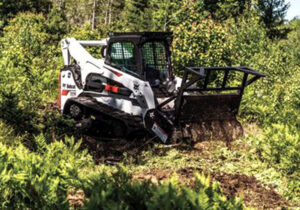
Transitioning a property to silvopasture usually requires two things: strategic clearing and strategic retention. That’s exactly what forestry mulching makes possible.
Traditional land clearing would push all trees into piles and strip the field bare. That’s the opposite of silvopasture. What you actually need is selective clearing — removing invasive species, undesirable volunteer trees, and dense brush while preserving and spacing valuable hardwoods and desired species.
Here’s how Boom Brush Control approaches a silvopasture setup:
- Site assessment: We walk the property with the landowner to identify valuable existing trees, invasive species that need to go, and the overall structure of the transition plan.
- Selective forestry mulching: Our equipment can work around trees you want to keep while clearing between them. We remove invasive shrubs (privet, kudzu, multiflora rose are common NC offenders), unwanted saplings, and dense brush that competes with pasture grasses.
- Row or grid clearing: For landowners planting new trees as part of their system, we can clear lanes or grids to receive new tree plantings while mulching the vegetation between rows.
- Stump management: Existing stumps from previous clearing can be incorporated — our mulching head can grind stumps to just below grade, eliminating obstacles for livestock and equipment.
- Ongoing maintenance: Silvopasture isn’t a one-time project. As trees grow and forage patterns change, periodic re-clearing of invasive regrowth is typically needed every few years. We offer ongoing service relationships for landowners with active systems.
What Types of Properties Are Good Candidates?
Silvopasture works best on properties that have at least some combination of these features:
- Five or more acres of mixed open land and wooded areas
- Existing or planned livestock operation (cattle, goats, sheep, horses, pigs)
- Desire for long-term land improvement, not just quick clearing
- Interest in USDA programs (EQIP, RCPP) or carbon credit markets
- Soil that needs organic matter input — which describes most of the NC Piedmont
You don’t need to be a full-time farmer to benefit from silvopasture. Many landowners in Union County, Cabarrus County, and surrounding areas are part-time hobby farmers or rural property owners who want to improve their land’s productivity and resilience over the long term. Silvopasture scales to any level of engagement.
Getting Started in North Carolina
The best first step is to assess what you’re working with. If you have a mix of pasture and brush, overgrown treelines, or cleared fields that you want to improve over time, there’s a good chance silvopasture has a role to play on your property.
Boom Brush Control works directly with landowners in the Charlotte metro and surrounding Piedmont counties to evaluate properties, develop clearing plans, and execute the site work that makes silvopasture possible. We’re a veteran-owned company, and we take the long view on land stewardship — because we think the land you’re managing today matters for the next generation too.
Curious whether silvopasture makes sense for your property? Start the conversation at boombrushcontrol.com/get-a-quote/ — we offer free consultations and honest assessments.